
The First Hide I Ever Tanned
The unexpected bond of tanning sheep hides by hand

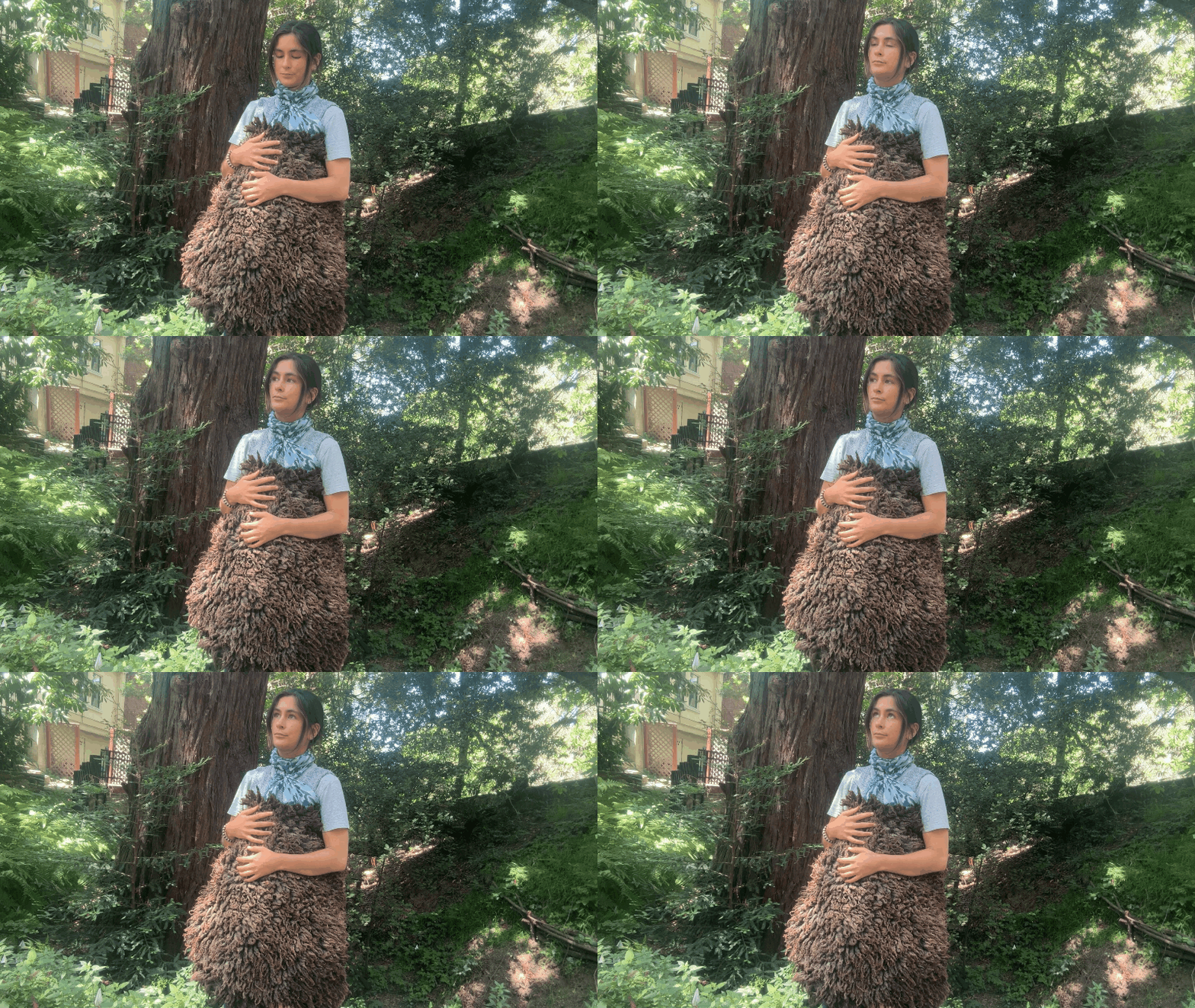
Kaixo lagun,
I’m trying to move closer to the sources of things I depend on: food, land, animals, and the people who care for them.
This has lead me to cross paths with people who care ferociously for the landscapes and communities of living beings they steward.
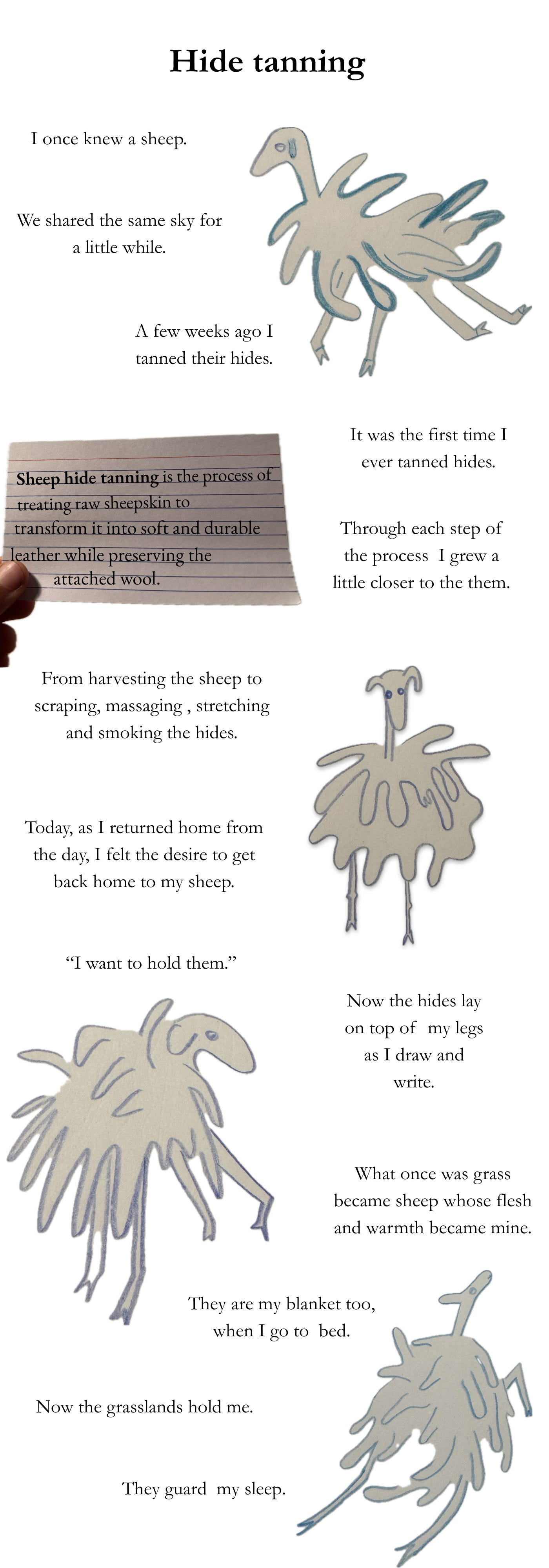
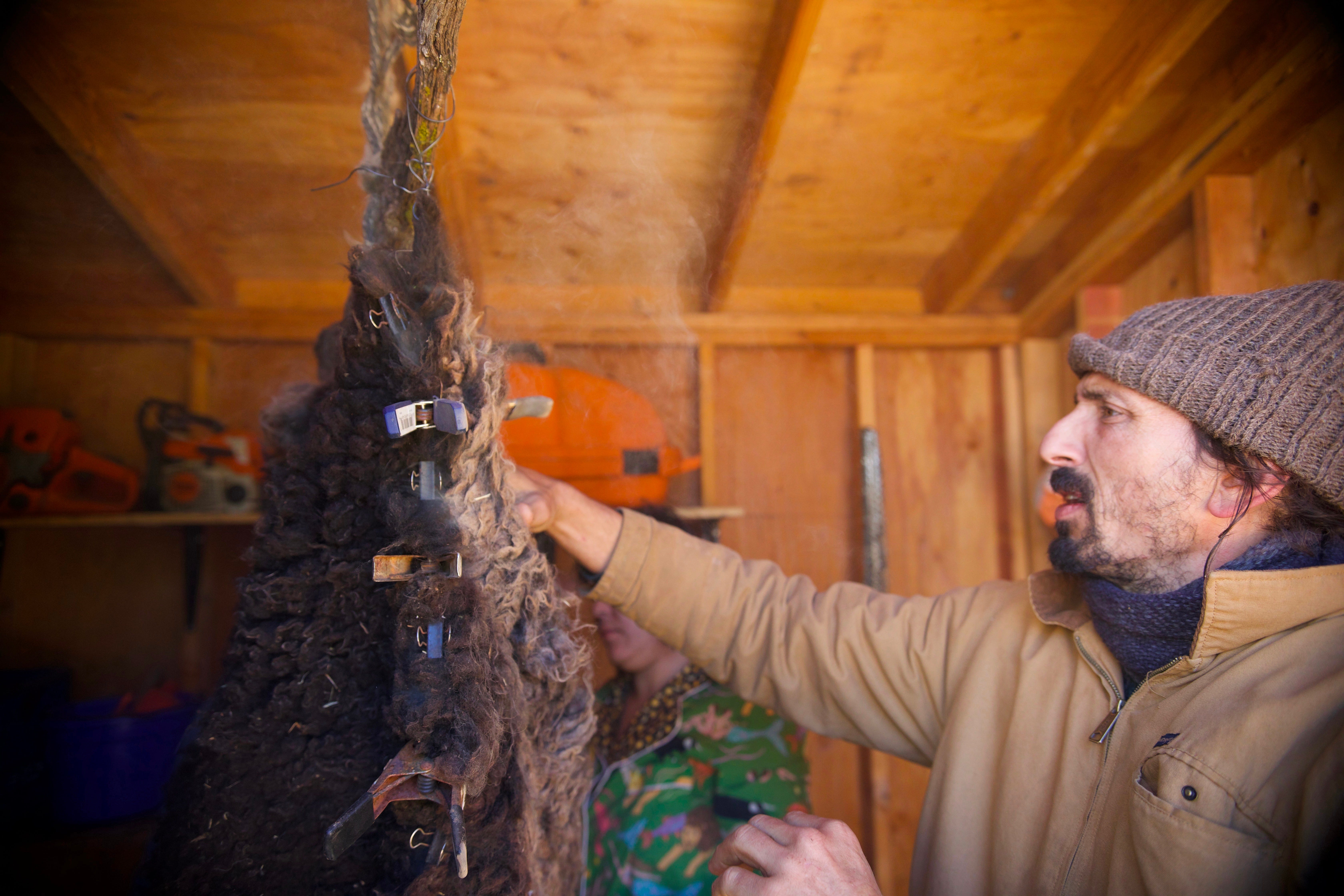
Last week I posted a photo essay about the experience and steps of tanning a sheep hide in Hopland California under the guidance of Johnny O’mara, a shepherd who tends animals the way one tends something that is not fully separate from oneself.
Quote I’m pondering:
“What is your agreement with life?”
— Johnny O’Mara
Johnny talks about the deals we make with life. I think about what is it that I ask or expect of it and what am I giving or willing to give in exchange. It’s a question of reciprocity. I need to ask him to tell us more in depth about it (this is the question on his instagram bio too.)
Inspiring Resources:
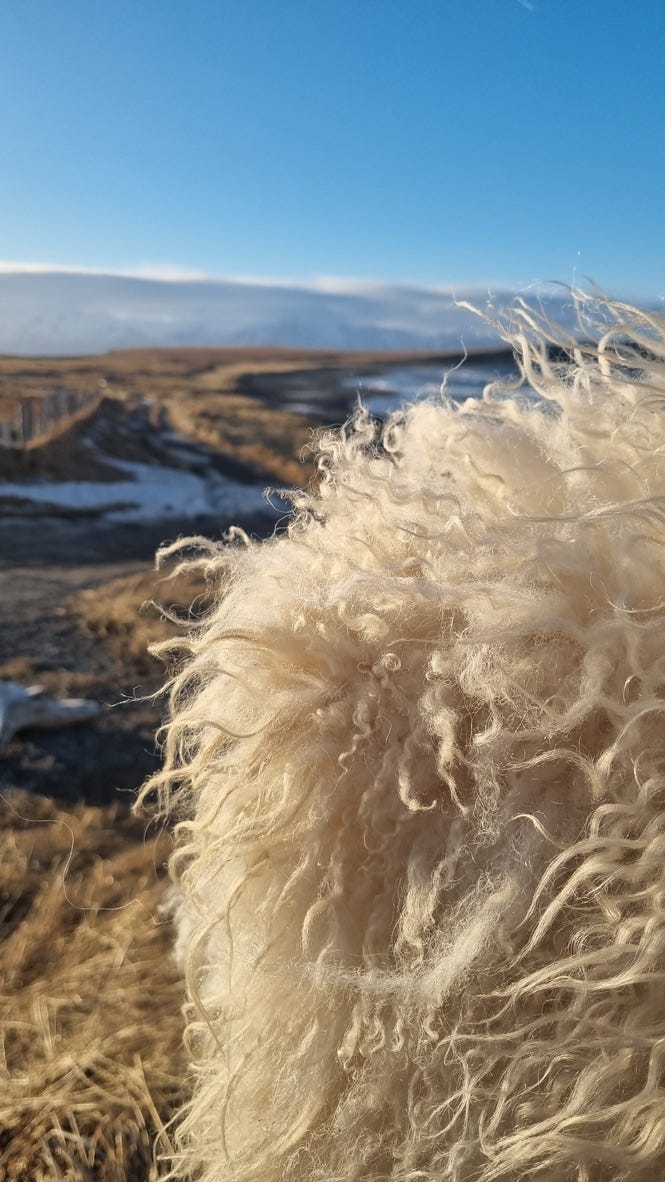
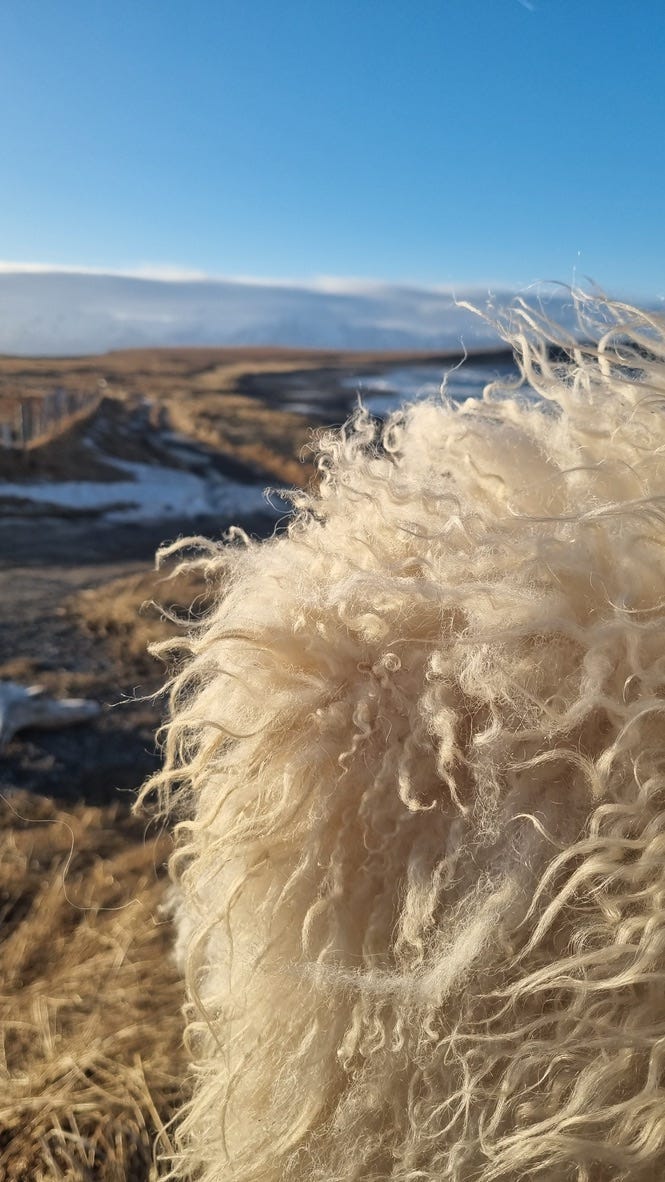
Teachings from tanning a sheep hide by Malena on Earth is another beautiful photo essay and reflection on the ways handcrafting connects us to the world. She shares her process tanning Icelandic sheep hides. I loved reading through and finding relations to my own experience.
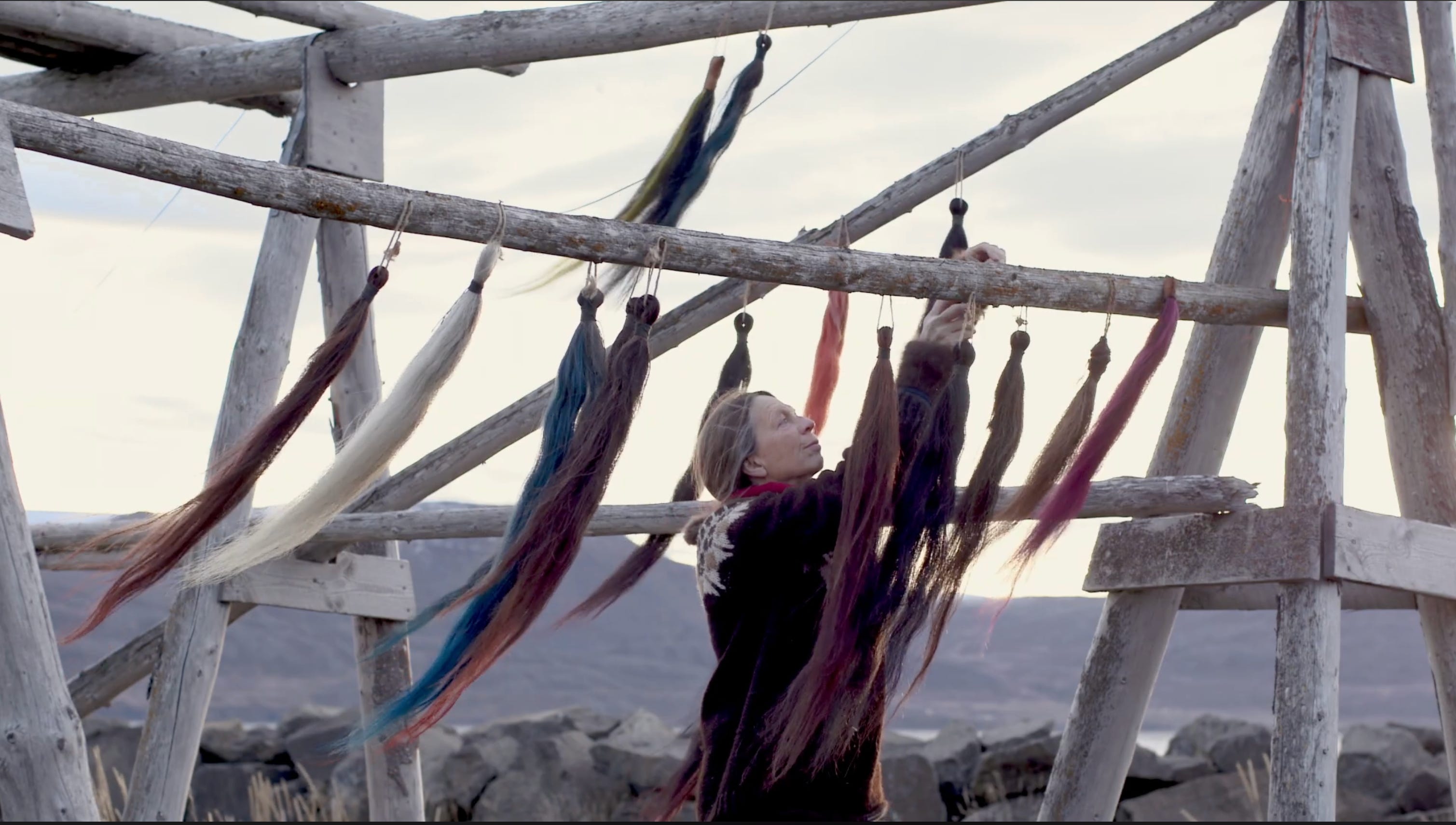
To Life is a 12-minute documentary by Stefanie Gartmann that tells in poetic images about the life of a female tanner in Iceland. Yes, Iceland again. Someone in the comments said “Ich kehre immer wieder zu ihm zurück - die eingefangenen Momente, die Wirkkraft der Farben, die Natur, Lenes Worte,... Das ist Kunst. Das geht unter meine Haut. Vielen Dank für dieses Wunderwerk.”1 I fully agree.
As I return to my craft, My Summer Artist Residency 2026 by Estee Zales was a fun and wonderful read about rebelling against traditional artist residencies to commit to her practice. “Most residencies ask you to work on a project. The single blazing thing. This residency declines that rule.
This is a research residency. There is no single project, no deliverable promised to anyone. There is only the commitment to show up on working days, to follow curiosity with discipline, and to document honestly.”
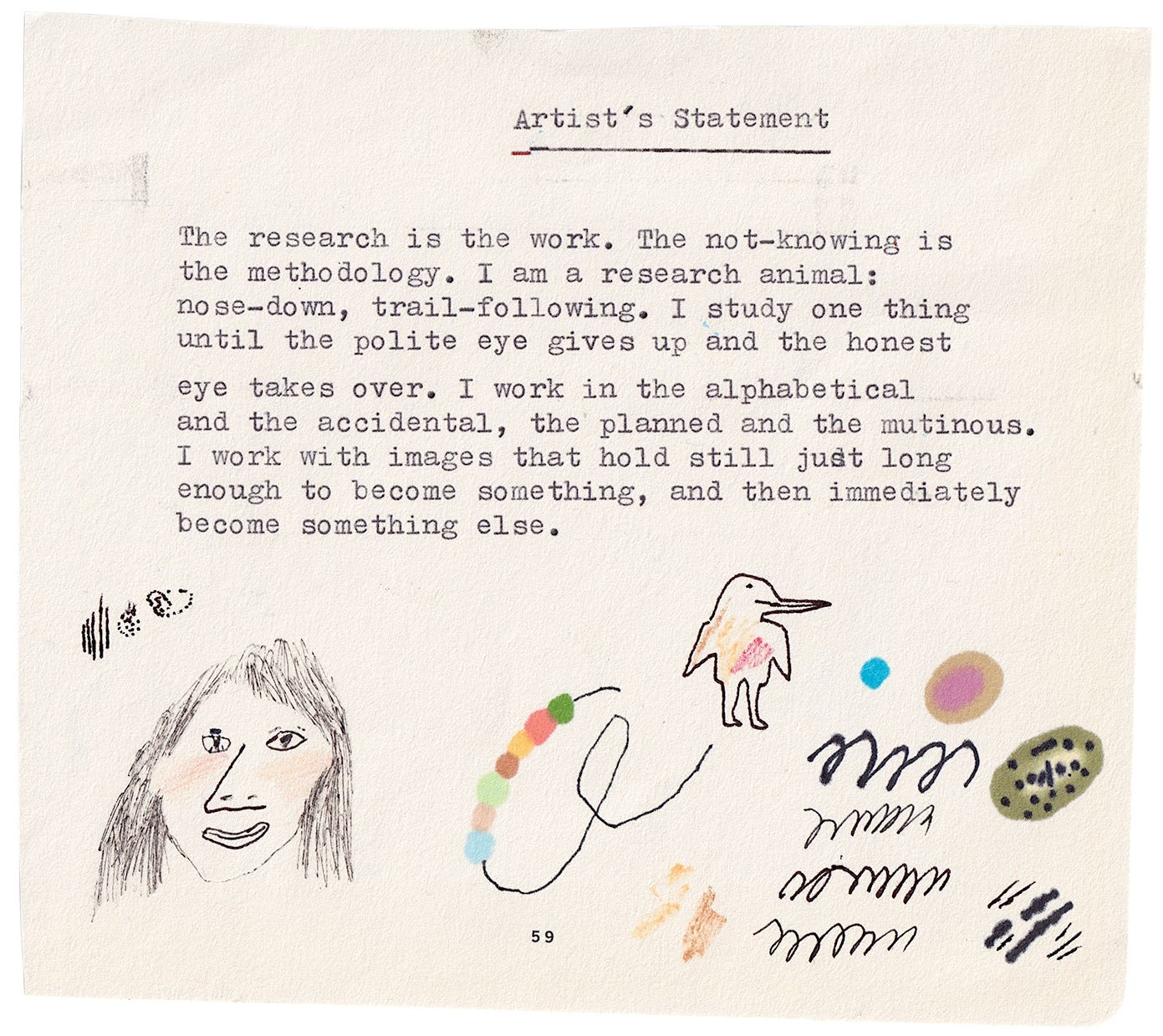
Image by Estee Zales
Question for you:
What is your agreement with life? Answer as you interpret and like.

The pages of most books were of mottled parchment, that is, dried sheepskin, which was universally available and nowhere more abundant than in Ireland, whose bright green fields still host each April an explosion of new white lambs. Vellum, or calfskin, which was more uniformly white when dried, was used more sparingly for the most honored texts. (The “white Gospel page” of “The Hermit’s Song” is undoubtedly vellum.) It is interesting to consider that the shape of the modern book, taller than wide, was determined by the dimensions of a sheepskin, which could most economically be cut into double pages that yield our modern book shape when folded. The scribe transcribed the text onto pages gathered into a booklet called a quire, later stitched with other quires into a larger volume, which was then sometimes bound between protecting covers. Books and pamphlets of less consequence were often left unbound. Thus, a form of the “cheap paperback” was known even in the fifth century. - Thomas Cahill, How the Irish Saved Civilization